
Cangiante
Color Beyond Light and Shadow
Among the most distinctive chromatic strategies of the Renaissance painting, Cangiante – cangiare (to change) – describes the deliberate substitution of one hue for another, when the natural modulation of a color could no longer adequately express light or shadow.
Rather than modelling form solely by making a single hue progressively lighter or darker, the painter shifts into an entirely different color: Yellow may pass into red or orange, for example, while blue may turn toward violet or green.
The method allowed painters to preserve chromatic intensity while articulating volume, movement, and the sculptural structure of drapery. Color thus ceases to function merely as the local attribute of an object and becomes an autonomous means of constructing form.
Michelangelo brought cangiante to an extraordinary level of expressive and monumental power in the Sistine Chapel Ceiling (1508–12), where garments frequently change hue across illuminated and shadowed passages, intensifying the sculptural force of the figures and the rhythmic architecture of the composition. Comparable chromatic transformations appear in Raphael’s The School of Athens (1509–11), where shifting colors animate drapery and differentiate figures within an exceptionally complex spatial order, and in Pontormo’s Deposition from the Cross (c. 1525–28), where the principle is pushed toward Mannerist abstraction: Acidic pinks, blues, greens, and violets detach color increasingly from ordinary natural perception. In cangiante, therefore, color does not represent what the eye sees; it constructs form, heightens visual intensity, and transforms the visible world into a deliberately orchestrated chromatic reality.
Whereas Chiaroscuro constructs visibility through light and shadows, Cangiante models it through modulations of hue.
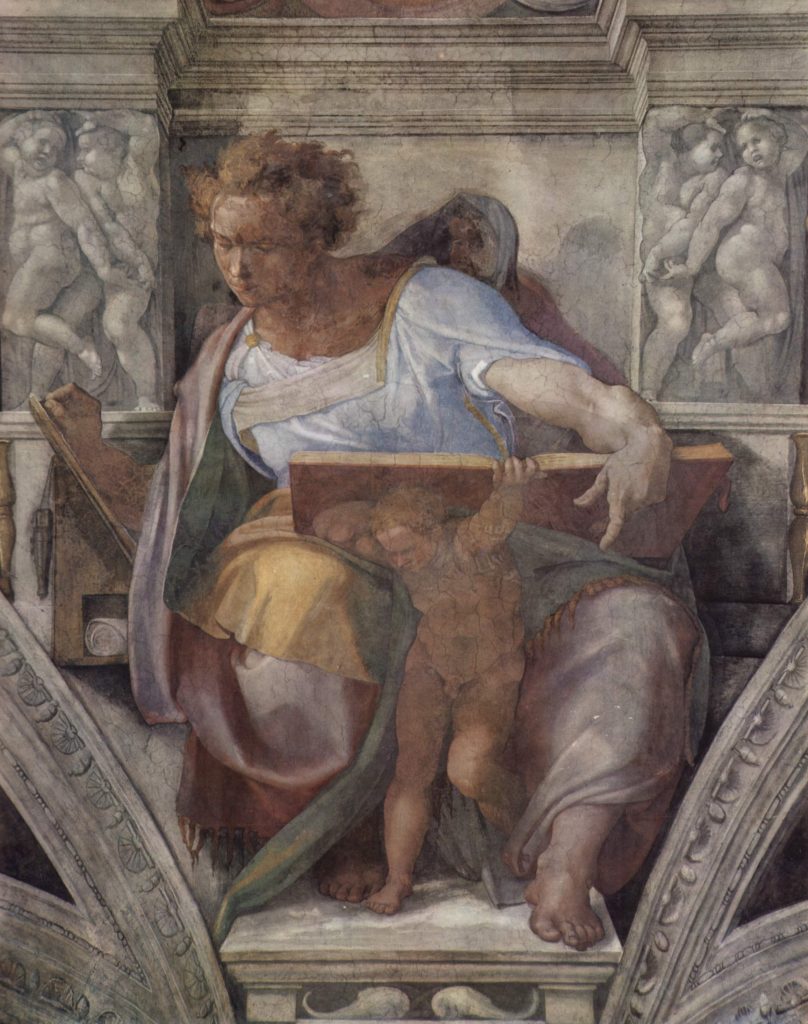
Prophet Daniel
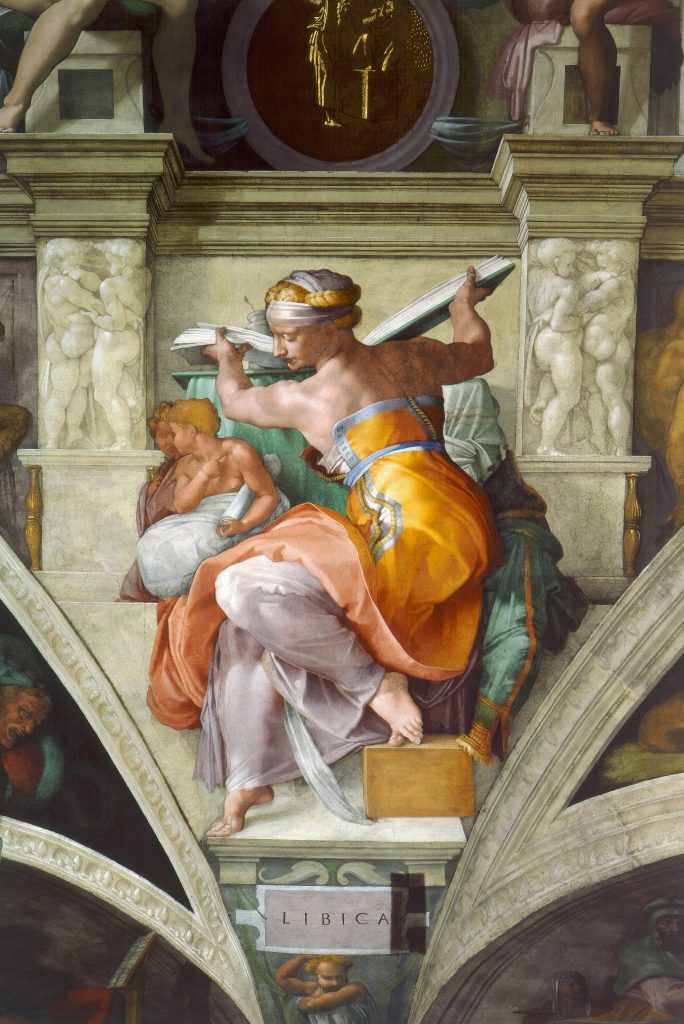
Sibila Líbica
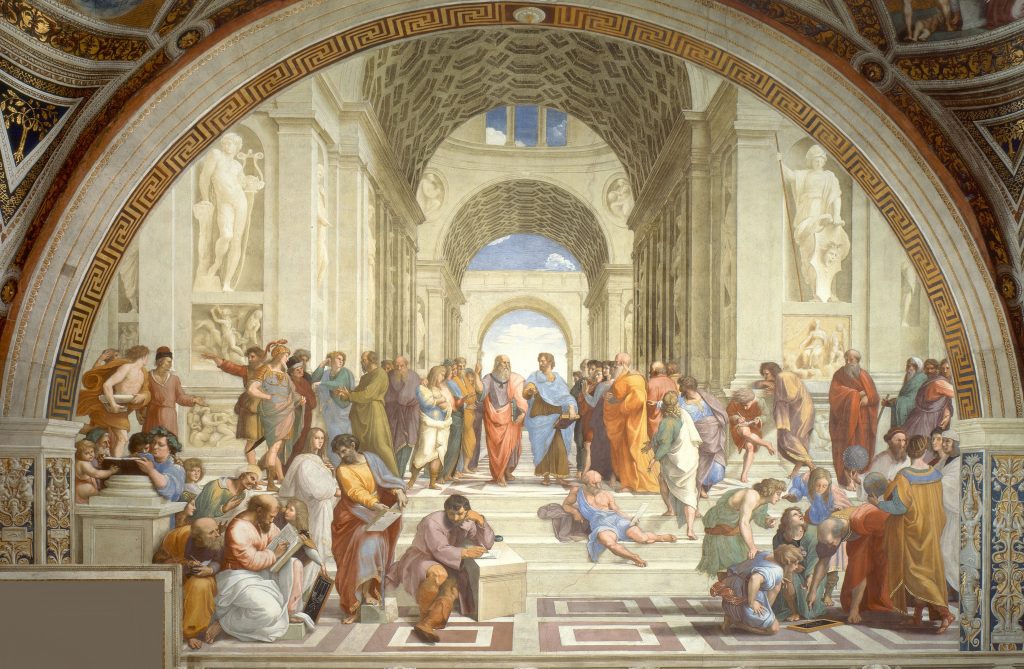
School of Athens
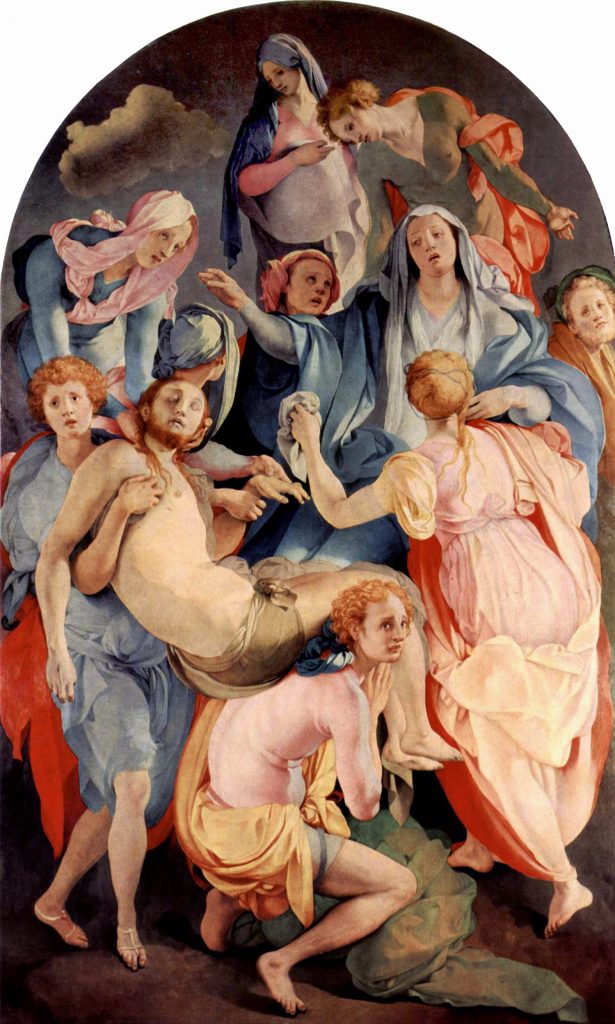
Deposition from the Cross