
Unione
Harmony of Color, Light, and Form
Among the principal pictorial strategies of the High Renaissance, Unione – unione (joining) – describes the harmonious integration of color, light, shadow, and tonal transition within a unified pictorial field.
Most closely associated with Raphael, the method may be understood as a synthesis of Renaissance approaches to modelling: It retains the subtle gradations and atmospheric continuity of Sfumato while preserving a greater clarity, luminosity, and chromatic richness.
Rather than allowing forms to dissolve extensively into shadow, as in Leonardo, Unione uses smoothly modulated transitions while maintaining the distinct presence of individual colors. Its aim is equilibrium: Figures remain volumetric and convincingly embedded in space, yet color continues to possess brilliance, differentiation, and compositional force.
Raphael brought this principle to exceptional refinement. In the Alba Madonna (1510), delicately modelled flesh, luminous garments, and landscape are joined through an extraordinarily controlled continuity of tone and atmosphere without sacrificing chromatic clarity. In the Madonna of the Meadow (1505–06), red, blue, and flesh tones retain their distinct identities while being reconciled through light into a serene spatial unity; and in the School of Athens (1509–11), this principle expands to monumental scale, coordinating a multitude of figures, architectural space, and varied colors within a coherent visual whole.
Unione transforms pictorial harmony into a method: Neither color nor shadow dominates, but each is reconciled with the others, producing an idealized unity in which diversity is preserved within order.
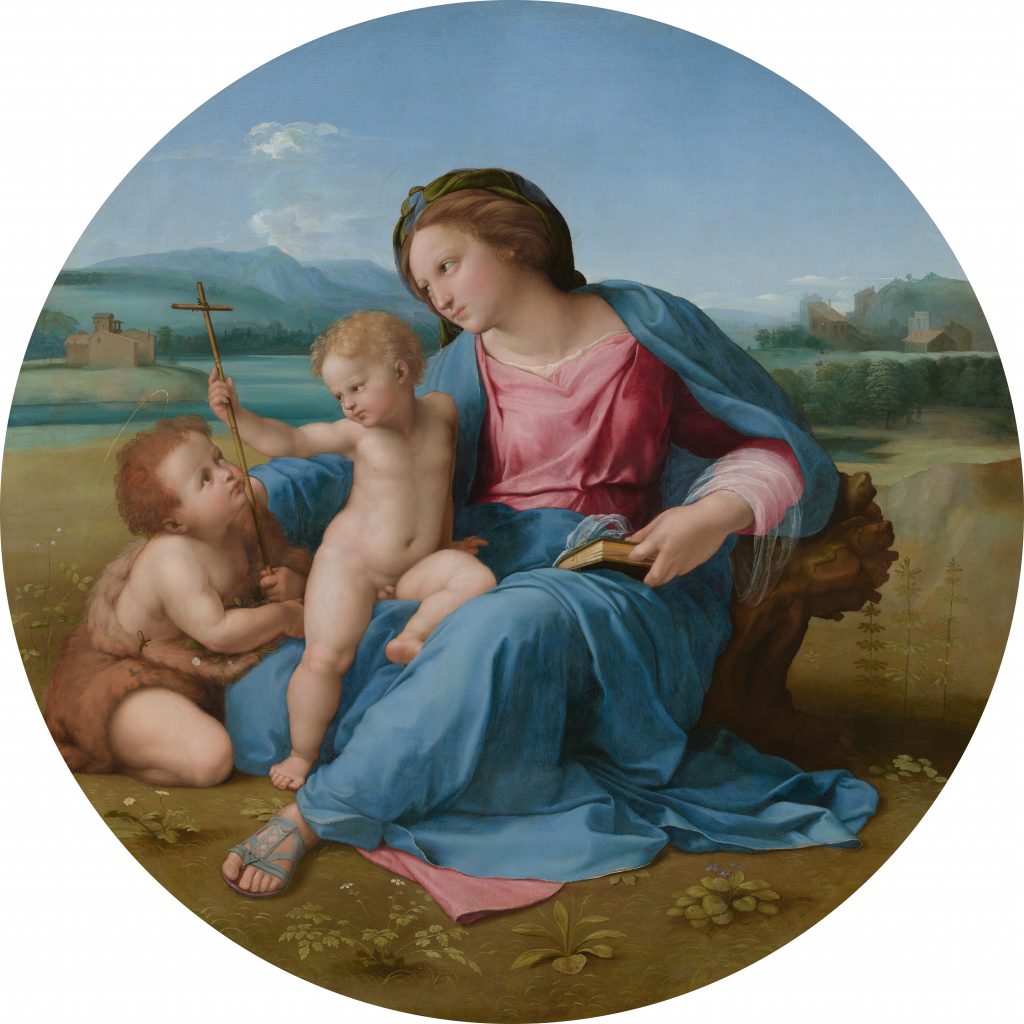
Alba Madonna
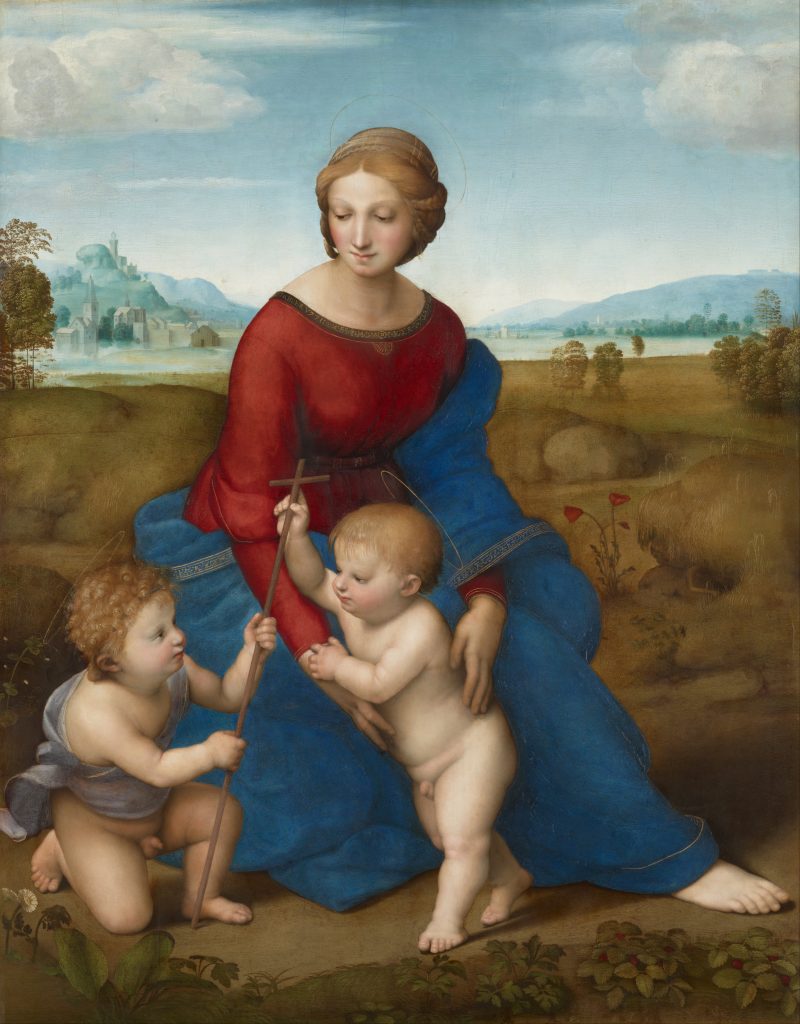
Madonna in the Meadow
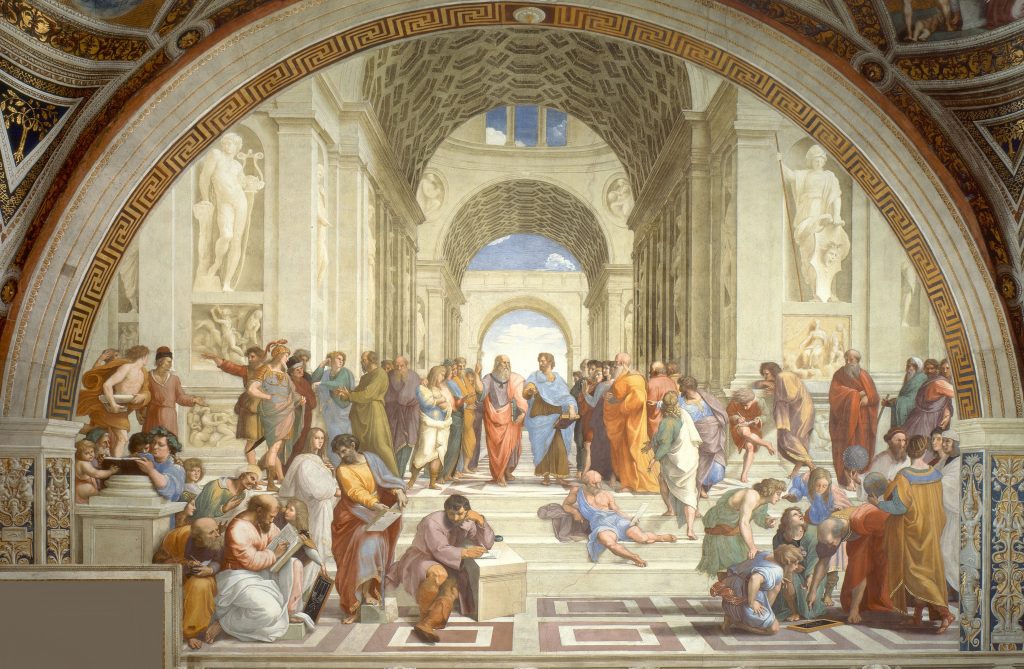
School of Athens